When you buy through links on our articles, Future and its syndication partners may earn a commission.

Earth's orbital environment is becoming increasingly crowded. Thousands of satellites—many of them inactive, damaged, or out of fuel—now circle the planet alongside fragments of debris from past collisions.
As more and more satellites enter orbit, one of the biggest questions becomes: how can these satellites approach and maneuver around each other safely? To answer that question, Luxembourg-based companies LMO and ClearSpace carried out a carefully designed simulation using the European Space Agency's Guidance, Navigation and Control Rendezvous, Approach and Landing Simulator (GRALS).
What is it?
GRALS is part of ESA's Guidance, Navigation and Control Test Facilities and is built to recreate close-proximity operations in space with remarkable realism. The satellite model shown in this image was developed by ClearSpace to replicate the geometry, materials, and visual complexity of real satellites.
Its crinkled gold thermal insulation, metallic structures, and the cup-shaped reflective thruster are not just aesthetic details but critical features that influence how light behaves in space and how cameras perceive an object during a rendezvous.
To ensure reliability, engineers combine computer-generated imagery used to train AI systems with physical testing on increasingly realistic models. Smaller models simulate long-range approaches, while larger, high-fidelity replicas like the one shown are used to test the most delicate, close-range phases of a rendezvous.
Where is it?
This photo was taken at the ESA's technical center, ESTEC, in the Netherlands.

Why is it amazing?
The thousands of satellites orbiting Earth pose growing risks to operational spacecraft and to the long-term sustainability of space activities. Before a spacecraft can refuel, repair, or safely deorbit another satellite, it must be able to see, identify, and approach its target with exceptional accuracy. Vision-Based Navigation systems are key to making this possible. Much like self-driving cars rely on cameras and AI to interpret their surroundings, VBN-equipped spacecraft must interpret light, shadow, reflections, and rapidly changing viewpoints in the harsh environment of space.
Facilities like GRALS play a critical role in bridging the gap between theory and reality. By testing real hardware against realistic satellite models under space-like lighting conditions, engineers can expose weaknesses, validate AI training, and build confidence that autonomous systems will behave safely once deployed in orbit.
Want to learn more?
You can learn more about satellite crowding and space junk.
NEUESTE BEITRÄGE
- 1
 OECD: Iran war dampening global growth26.03.2026
- 210 Demonstrated Tips to Dominate Video Altering on Your Cell phone in 202330.06.2023
- 3Eating ultra-processed foods could raise precancerous polyp risk for women under 50, according to research14.11.2025
- 4Instructions to Expand Your Advantages from an Open Record Reward17.10.2023
- 5One killed, several injured in Iran missile barrage on southern, central Israel27.03.2026
- 6Exploring the Market: Unsold Rams May Be Less expensive Than You Naturally suspect07.11.2023
- 7Building a Flourishing Business: Illustrations from Business people25.09.2023
- 8Step by step instructions to Keep up with the Life span of Your Kona SUV's Battery Duration17.10.2023
- 9Europe’s EV Boom Was Real in 2025. The Real Fight Starts In 202631.12.2025
- 10'You're no longer my sister' - rows erupt as war divides Iranian families31.03.2026
- 11Surveys of Thrillers That Re-imagined the Class01.01.1
- 12Flu cases are rising with a strain that makes older people sicker01.01.2026
- 13How Mars 'punches above its weight' to influence Earth's climate15.01.2026
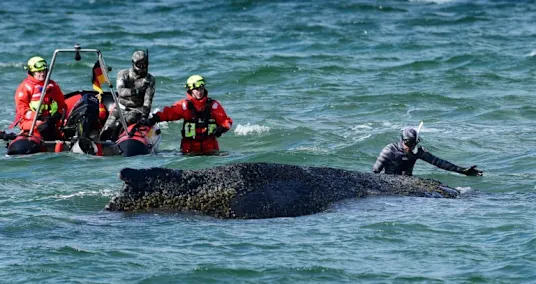
- 14Freed whale gets stranded again off German coast29.03.2026
- 15Decrease in Home Buy Credits and Home loan Renegotiating Rates: An Outline of Latest things30.06.2023










Ähnliche Artikel
- Artemis 2 captures historic 'Earthset' photo | Space photo of the day for April 7, 202607.04.2026
- Tesla Germany Registrations Quadruple to 9,252 Vehicles in Best March Ever07.04.2026
- What's going on with Katseye? The Manon Bannerman hiatus drama, explained.07.04.2026
- Two IDF officers, civilian face indictment in alleged Gaza aid-truck smuggling scheme07.04.2026
- West Palm Beach Shorecrest, renderings of downtown waterfront condo07.04.2026
- Artemis II astronauts make long-distance call to the space station as they head home from the moon07.04.2026
- Tuesday, April 7. Russia’s War On Ukraine: News And Information From Ukraine07.04.2026
- The Eastern Bongo, Kenya’s Rare Forest Antelope on the Brink07.04.2026
- U.K. blocks Kanye West from entering Britain to headline now canceled festival: What led to the ban07.04.2026
- Russia confirms 16 Cameroonian soldiers killed in Ukraine war07.04.2026
- First Phosphate advances battery-grade phosphate project as analysts highlight strategic Federal support07.04.2026
- After fleeing past Hezbollah fighting, some Israelis on northern border vow to stay07.04.2026
- 'Unreal' solar eclipse: Artemis 2 crew just saw one of the rarest sights in spaceflight history07.04.2026
- Chinese construction workers in Israel: 'I’d rather be bombed than live in poverty'07.04.2026
- Broken toilet, T-shirts on windows and collecting saliva: The weirdness of daily life aboard Orion07.04.2026
- Czech Republic caps fuel prices amid Iran war energy crisis07.04.2026
- NASA releases stunning new images captured by the Artemis II moon mission, including 'Earthset' and a solar eclipse from space07.04.2026
- Amid Iran war, 53 of Israel's future scientists showcase projects in Jerusalem contest07.04.2026
- Iranian-linked drone attack kills Kurdish couple in northern Iraq07.04.2026
- Thousands of small fish defy gravity to climb Congo waterfall07.04.2026